Andrew Herdeg of Lake Flato Architects and David Meaney of the University of Pennsylvania | Inside Amy Gutmann Hall: Philadelphia's First Urban Mass Timber Building
Courtesy of Lake Flato
Bringing Warmth to Research Facilities at Penn
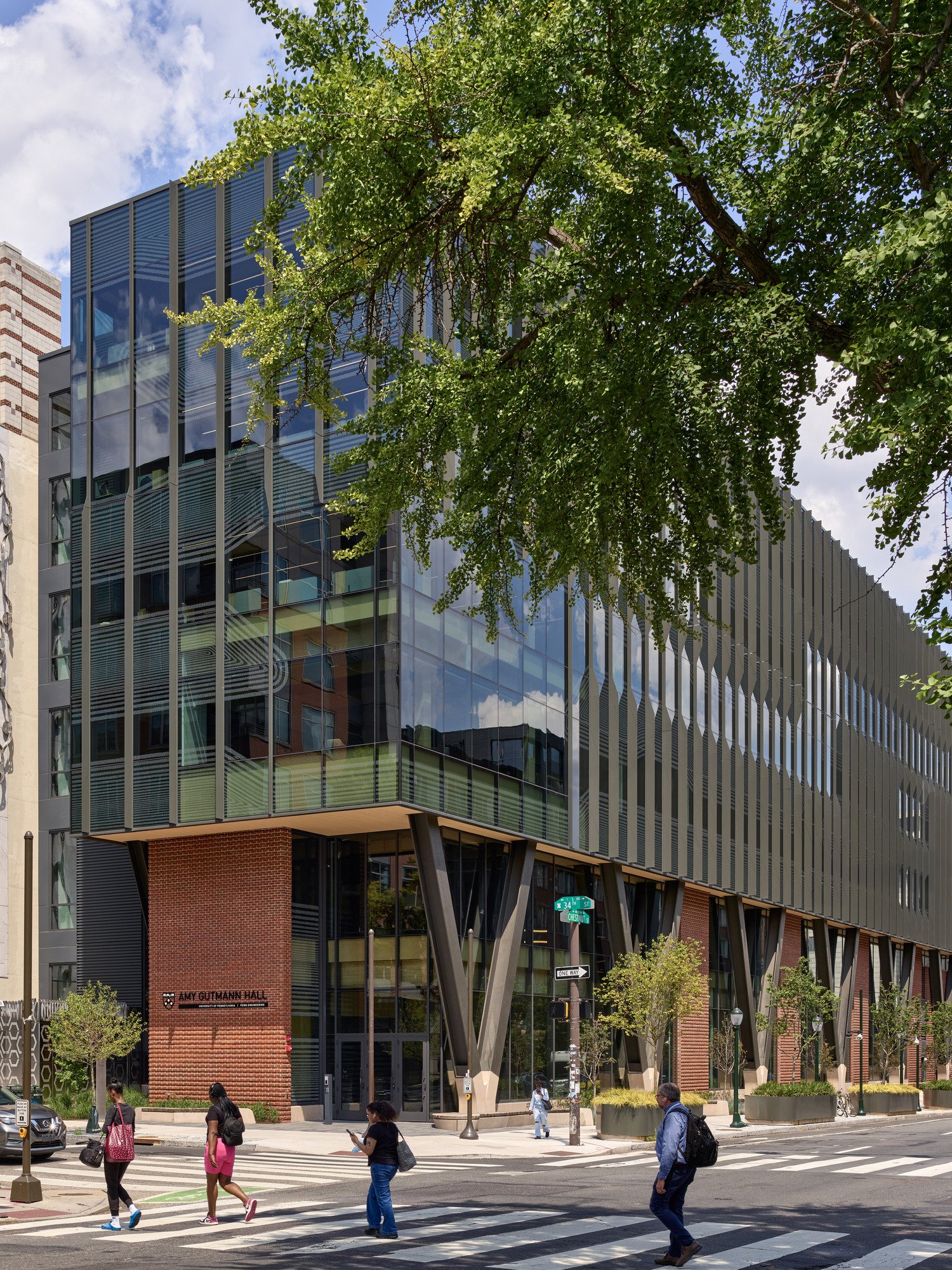
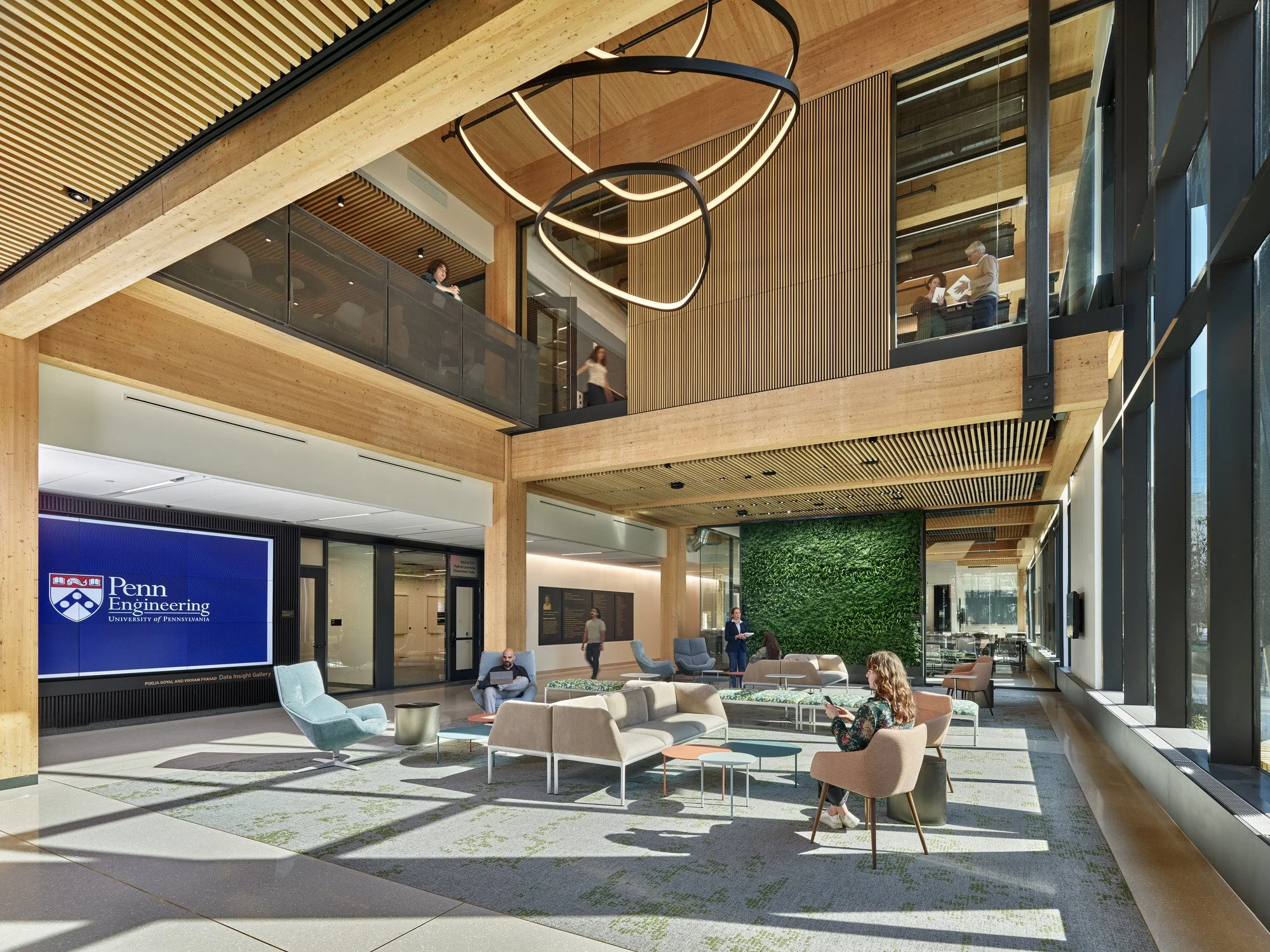
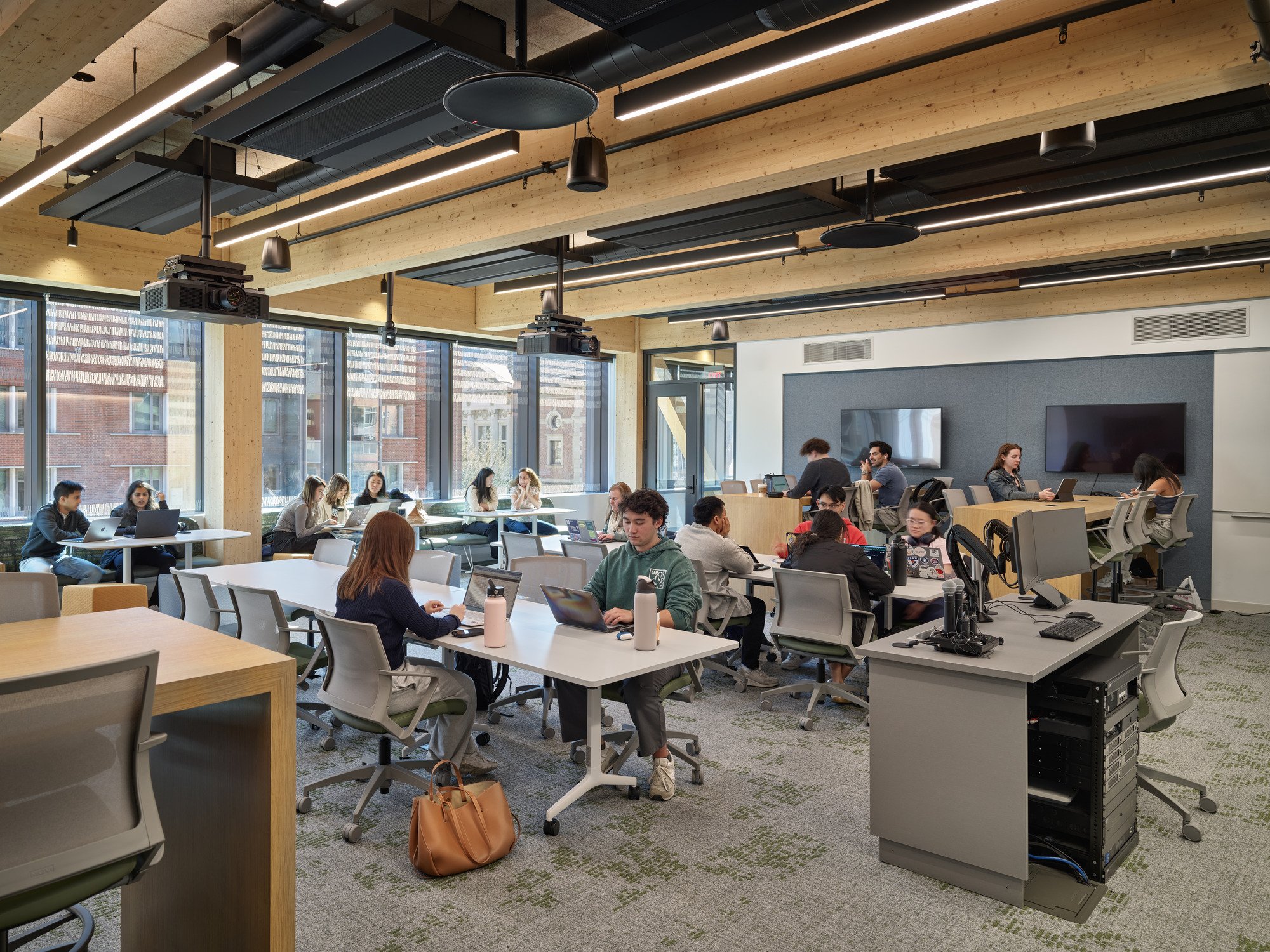
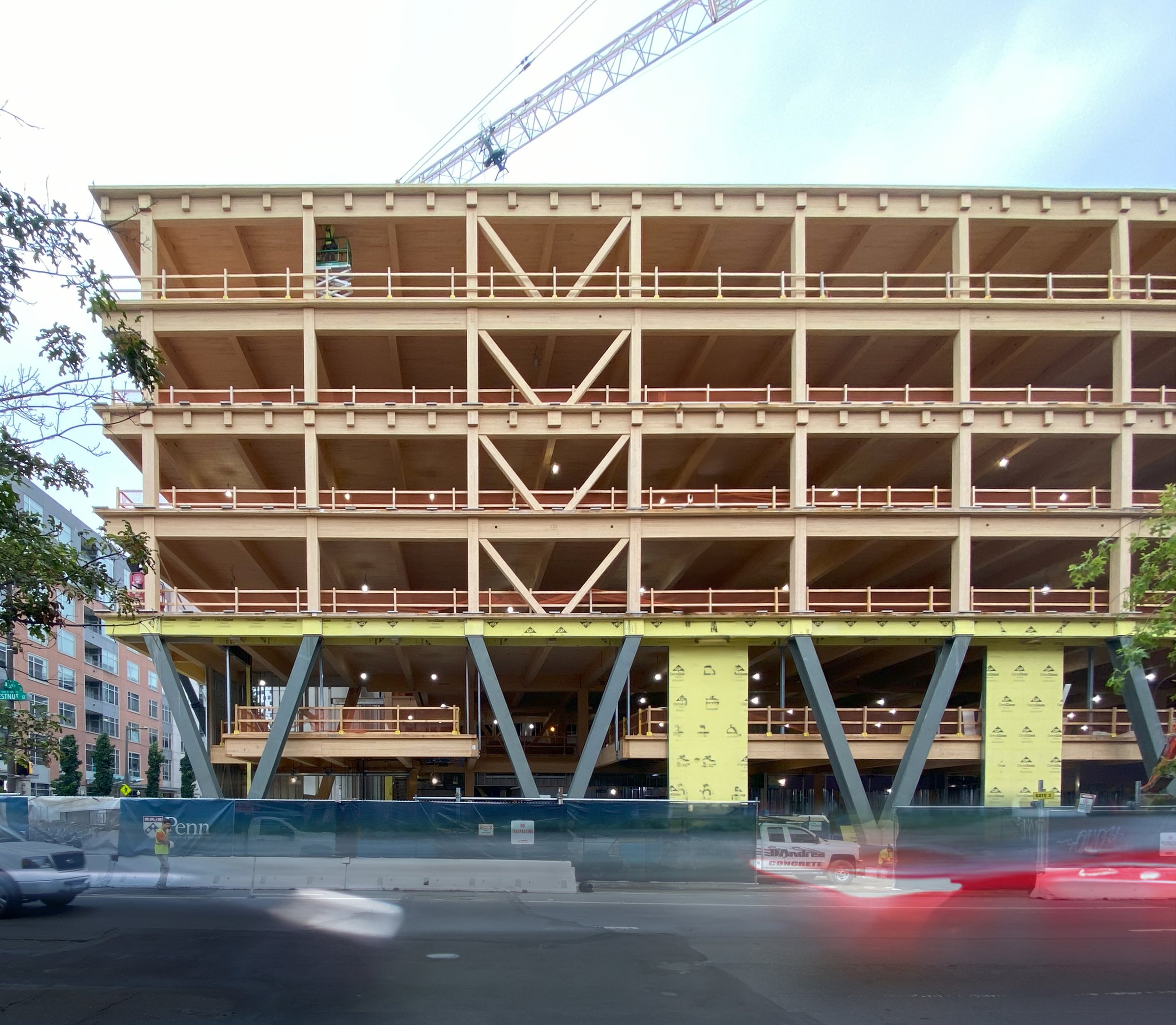
When most universities build research facilities for data science and AI, they create sleek, futuristic spaces that showcase technology. The University of Pennsylvanias School of Engineering and Applied Science (Penn Engineering) took the opposite approach with Amy Gutmann Hall. The six-story building uses mass timber construction to bring natural warmth and a sense of openness to technical programs. Walking through the 116,000-square-foot structure, the exposed wood columns, beams, and ceiling decks contrast with a fresh color palette rarely seen in institutional environments.
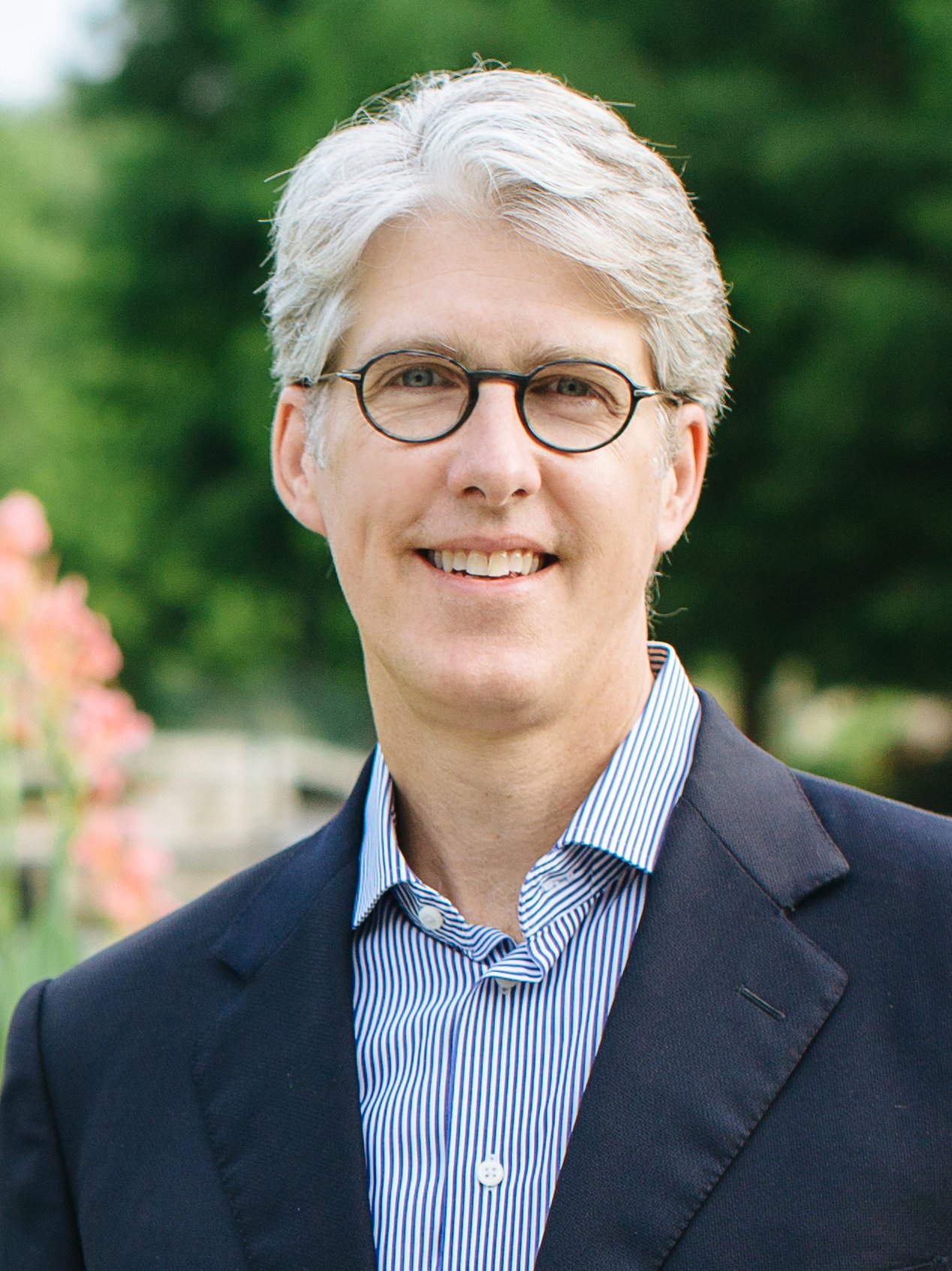
Andrew Herdeg, Partner at Lake Flato Architects, leads projects that connect people to the natural environment through warm, contextual architecture. Lake Flato's work spans from private residences to complex university facilities, always designing within an environmental context. David Meaney serves as Solomon R. Pollack Professor of Bioengineering and Vice Provost for Research at Penn where he guides planning and facilities decisions for a campus that values collaboration, sustainability, and financial stewardship.
This conversation explores why Penn Engineering selected mass timber for a major academic building, how the design team front-loaded procurement to reduce risk, and the outcome of incorporating hospitality-like experiences into research environments. From union negotiations to CLT panel optimization, the discussion reveals both the philosophy and practical realities of building Philadelphia's first large-scale urban mass timber structure.
Listen on Spotify | Listen on Apple Podcasts | Watch on YouTube
“We saw a really interesting juxtaposition of the role of nature and technology and human experience that led us to a place that was about thinking about this building as celebrating the human experience, but housing technology.”
Courtesy of Lake Flato
About Andrew Herdeg, FAIA
Andrew is a Partner with Lake Flato Architects and has 35 years of experience designing award-winning university facilities, private residences, and environmental interpretive centers across the country. With a foundation in regional sustainable design, his buildings respond to each unique site and environmental context, enhance place, and celebrate the craft of construction. He is passionate about buildings that create cohesive and pedestrian-oriented campuses and foster healthy social and academic communities.
Andrew has developed a body of work that reinforces essential human experiences at the intersection of architecture and landscape. Fostering the emotional, psychological and spiritual relationship between people and the natural environment, his designs reflect a commitment to the study of place: climate, natural resources, cultural precedents, and regional building traditions. Through his work, Andrew strives to foster meaningful and lasting relationships between building users and the natural environment, demonstrating a confluence of the art of building, the science of sustainability and a love for natural landscapes.
Courtesy of University of Pennsylvania
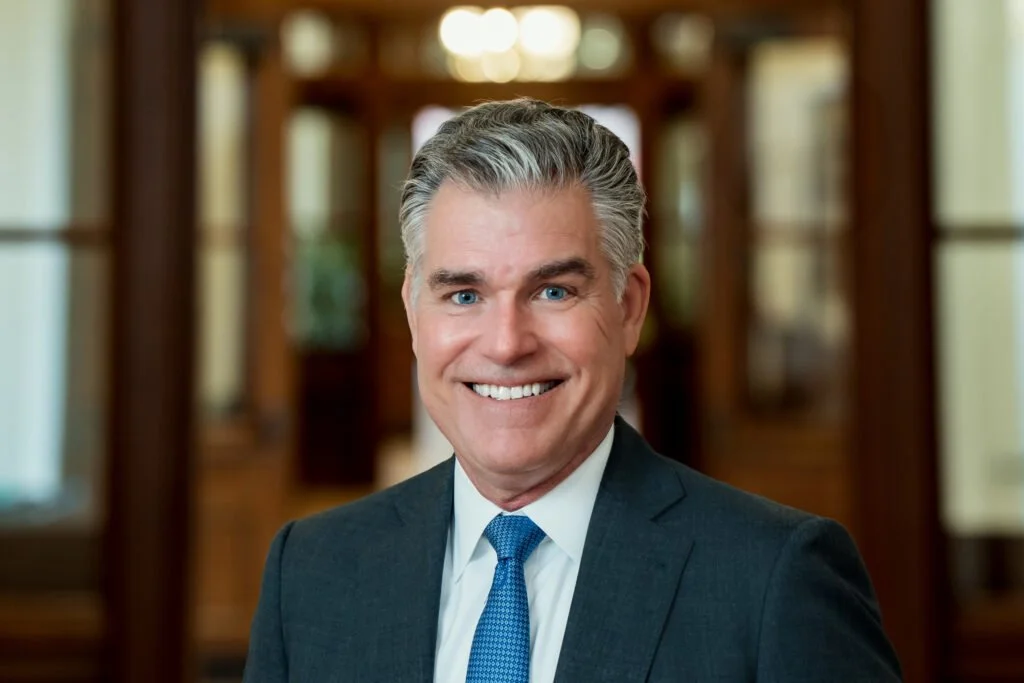
About David Meaney
David F. Meaney is a pioneering researcher in traumatic brain injury who has taught at Penn since 1993, following postdoctoral work at the university. As the Solomon R. Pollack Professor of Bioengineering and Vice Provost for Research, he oversees Penn’s $1.4 billion research enterprise, shaping policy and advancing strategic initiatives across the University’s diverse portfolio of research programs. His leadership encompasses strategic planning for research development, administration of new research facilities, and fostering partnerships between Penn and industry while facilitating the translation of discoveries from University laboratories to public benefit.
Prof. Meaney brings to his role extensive experience in research administration and strategic planning, having recently completed his tenure as Senior Associate Dean of Penn Engineering, where he led the school’s dramatic space expansion. He managed 550,000 square feet of research space while leading the planning and construction of 125,000+ square feet of new facilities, including data science and energy research buildings representing a $150 million capital investment. His vision for interdisciplinary collaboration resulted in transformative initiatives including Penn Health Tech, the Center for Precision Engineering for Health (CPE4H), and strategic partnerships that have generated over $25 million in follow-on funding across engineering, medicine, and the life sciences.
Courtesy of Lake Flato
Courtesy of Lake Flato
Episode Timestamps
(01:56) How Andrew's firm brings residential design principles to institutional projects
(11:14) The eight-year planning process for a data science building in a doubling-data world
(15:43) Eight competing design visions and Lake Flato's winning pitch
(21:55) Designing for deep focus work while encouraging spontaneous collaboration
(30:09) Running cost analysis: mass timber versus conventional steel and concrete construction
(34:29) Achieving 52-70% embodied carbon reduction through integrated structural systems
(38:31) Shifting procurement left: how early contractor engagement de-risked the project
(48:31) Experiencing exposed timber, natural daylight, and the southern campus vista
Courtesy of Lake Flato
About your host:
Atif Qadir is a licensed architect and entrepreneur, interested in solving big problems through innovation and technology. He has founded two proptech companies and a real estate development firm, building products ranging from software to workforce housing.
His work has been covered by Technology Review, The Real Deal, Commercial Observer, and Propmodo. He’s also a frequent speaker on the future of buildings and cities on popular industry podcasts and at conferences, including this past year at the Commercial Observer National DEI Conference, Yale AREA Conference, Columbia Real Estate Symposium, Open Data Week NYC and Austin Design Week.
About Michael Graves
The world-famous design firm Michael Graves is also a founding sponsor of American Building. Its namesake, the iconoclastic designer Michael Graves, FAIA was a fierce advocate for people-centric design. His work defines a generation of American architecture and includes the Portland Building, the Humana Building and the Denver Public Library. The 1st season of American Building was filmed live at The Warehouse, his historic home in Princeton, New Jersey:
Rate, Review, & Subscribe on Apple Podcasts
Did you love this episode? Let us know by rating and review our show on Apple Podcasts. It’s easy - simply click this link, click on Listen on Apple Podcasts, scroll to the bottom of the page, and select “Write a Review”. Let us know what you liked best about the episode, and what others can expect when they listen to our show.
While you’re at it, consider subscribing to American Building. When you subscribe, you can guarantee you never miss a conversation with one our renowned designers, architects, and developers. Subscribe now!